Spark P2™
Universal Hand-Held Partial Discharge Surveyor

Universal Hand-Held Partial Discharge Surveyor
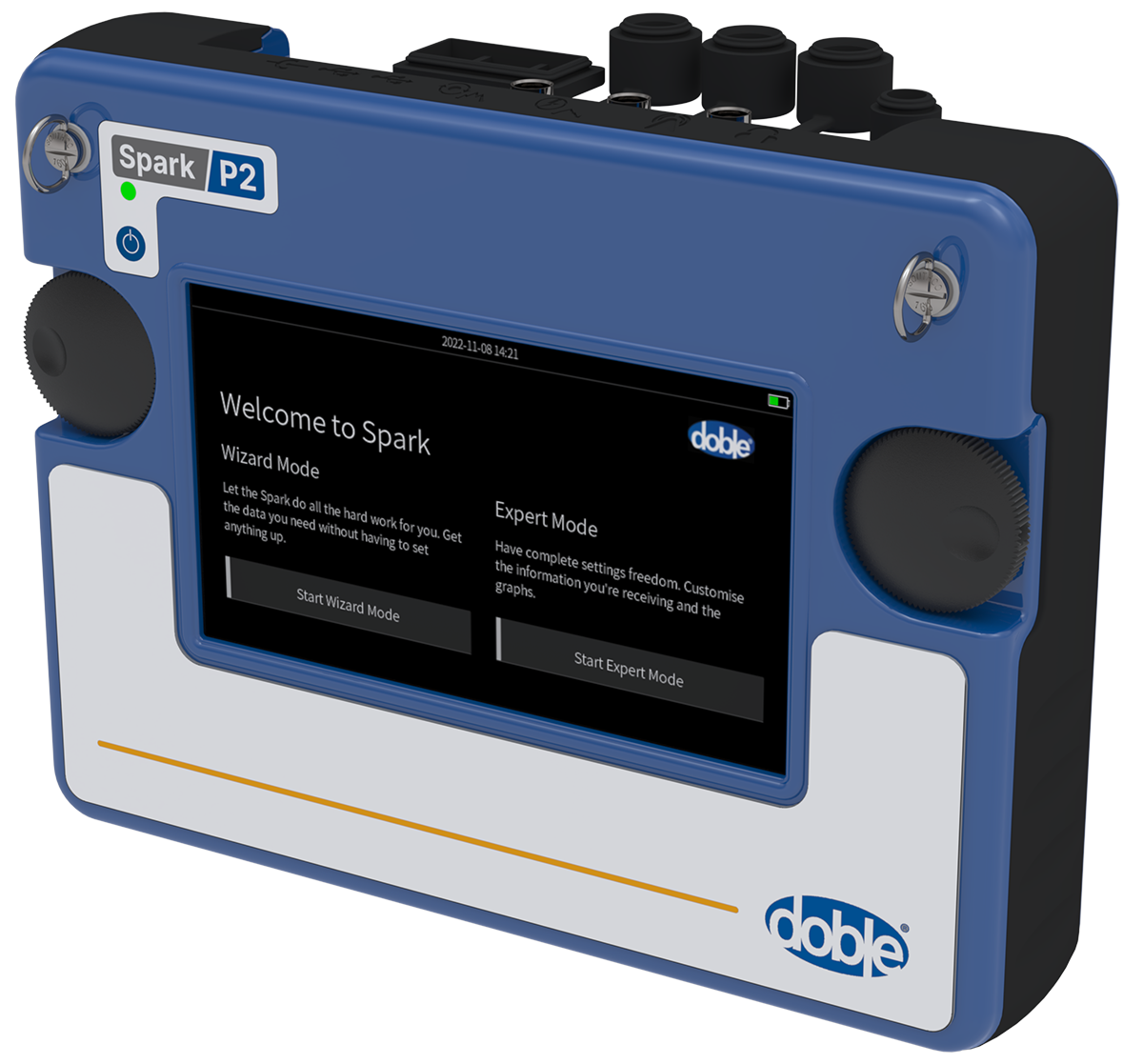
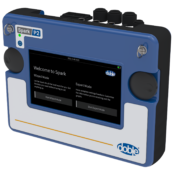
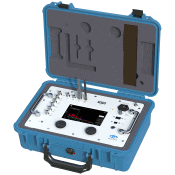
The power to detect, diagnose, and prevent potential failures is now at your fingertips with the Spark P2™. As a handheld partial discharge (PD) and radio frequency interference (RFI) measurement device, the Spark P2™ delivers advanced diagnostics in a compact, easy-to-use format, making it a must-have for field engineers, technicians, and subject matter experts.
Expert Mode and Automatic Mode
Subject matter experts can customize every setting and detector configuration of the Spark P2 to utilize its wide range of analytical tools helping them to identify PD in the most complex scenarios. Non-expert users can utilize customizable measurement templates and automatic acquisition methods to reliably acquire quality data without extensive training requirements or PD expertise.
UHF Antenna RFI Surveys and UHF narrow band tuner
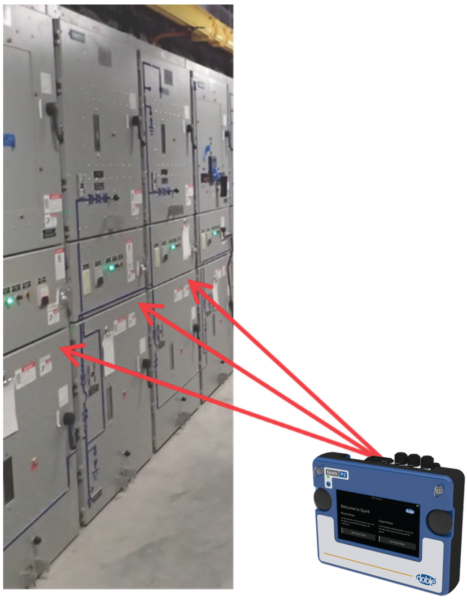
Whether walking through a substation with a monopole antenna or using a directional antenna, the Spark P2’s UHF detector and analytical tools allow to identify PD within substations by utilizing contactless antennas from a safe distance.
Additionally, the UHF detector can be utilized to assess transformers and GIS with suitable UHF sensors. The Narrow-band tuner provided by Spark P2 is significantly more sensitive than frequency shifter measurement methods, and is specifically suited for in-service and commissioning testing of test objects where UHF sensors are available (GIS, TX).
Transient Earth Voltage (TEV) Surveys
Switchgear assessments can be performed with TEV sensors placed on the enclosures of individual cabinets to analyze and identify PD.
High Frequency Current Transformer (HFCT) Surveys
HFCTs can be utilized on a wide range of test objects, such as cable accessories, transformers, and circuit breakers. They are typically placed around the ground connections of the device under test
Acoustic Emission (AE) Testing
Use ultrasonic microphones to identify PD in liquid and gas filled insulation systems such as transformers and GIS.
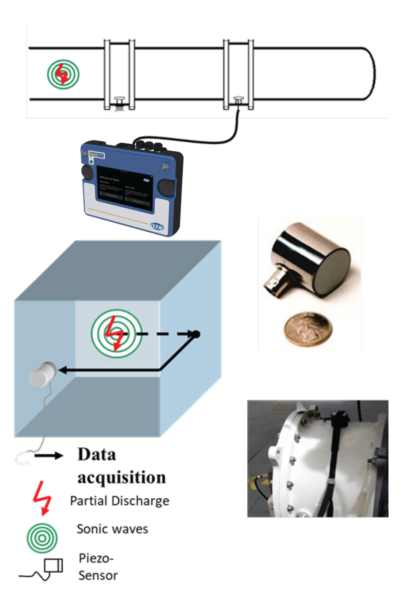
Testing of individual switchgear compartments and bus compartments using TEV and AE sensors.
Identifying developing defects in air insulated switchgear is made easy with the Spark P2.
The detectors provided in the Spark P2 allow for the use of sensors such as TEV or acoustic.
The instrument enables the user to utilize internal UHF spacer sensors, HFCTs, and acoustic emission sensors to identify and locate partial discharge within GIS installations. The UHF narrow band tuner enables the user to measure PD in environments where noise is present that would contribute to frequency shifter based measurements
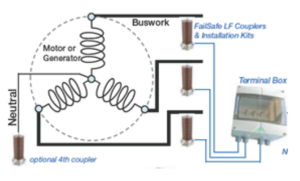
Spark P2 can interface directly to available capacitive couplers and derive PD as well as synchronization signals.
The optional UWB detector can be used to acquire PD pulses as integrative charge measurements
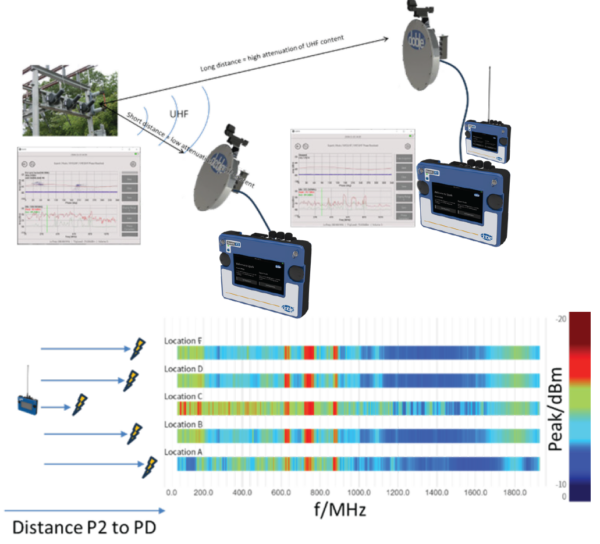
Radio Frequency Interference Measurements with aerial or directional antennas in UHF mode allow to identify areas where PD is present within a substation, without physical contact to the test object.
If an asset is identified as being suspicious of showing partial discharge activity, the Ultra-Wide-Band and Acoustic Emission detectors of the Spark P2 allow for the use of high frequency current transformers and acoustic microphones to further investigate the device under test.
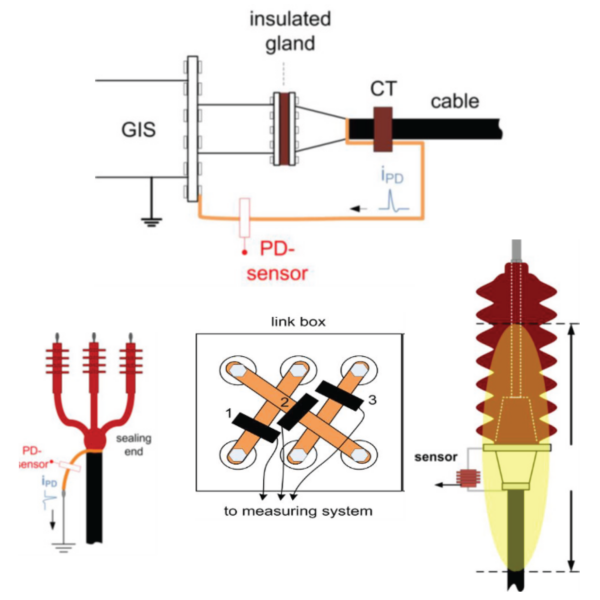
High frequency current transformers can be used to identify PD within cable accessories by placing these sensors on suitable ground connections
Using Very High and Ultra High frequencies in measurements on cable accessories the measurement sensitivity for these accessories is greatly increased while becoming less sensitive to nuisance signals from further away.
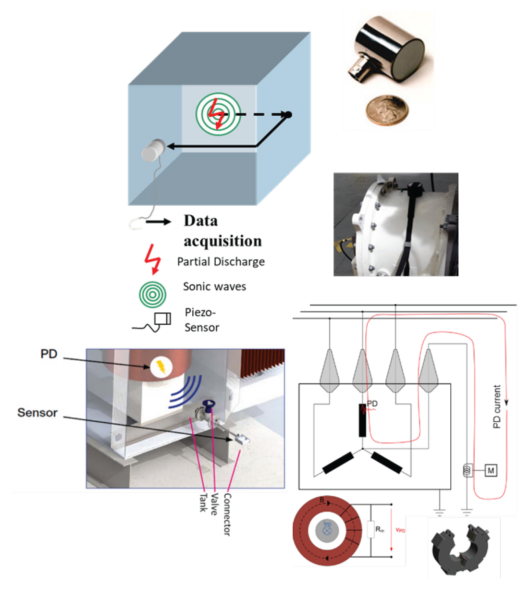
Various different detectors can be utilized to identify PD in power transformers. HFCTs placed on suitable tank and neutral ground connections allow for analysis of PD in HF and UWB frequency ranges. Internal UHF sensors can be used to detect radio frequency emissions of PD within the transformer tank. Acoustic emission sensors placed on the tank walls allow to detect PD sounds within the tank.
Take full advantage of the advanced detectors without the need for a subject matter expert. The automatic acquisition mode enables users of all skill levels to acquire reliable HF and UHF data.
Customizable measurements templates and menu structures allow to meet the users custom test regiment requirements.
Each measurement if associated with site and asset information, to strengthen data management.
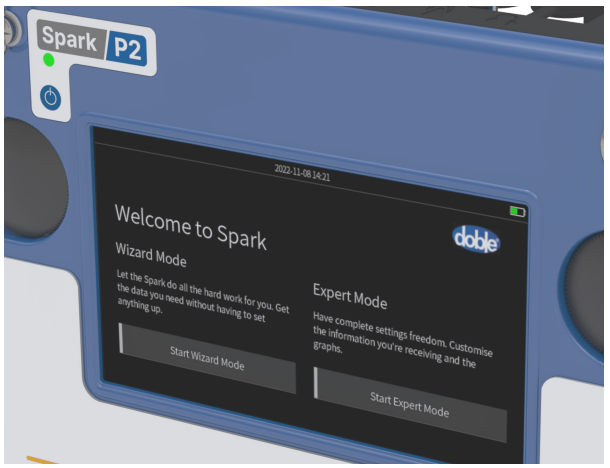
Full control of all aspects of the acquisition system, its various detectors and diagnostic tools.
The user can choose:
Fully customizable input configuration including internal amplifiers and attenuators, filters, DC offset for powered sensors and external amplifiers.
Analyzing signal characteristics using the spectrum analyzer allows to identify frequency ranges where pulse shaped signals are present, to then specifically
measure at these frequencies, ignoring adjacent bands with potential noise and nuisance signals. The Spark P2 supports Peak, Quasi-Peak, and Average Spectrum measurements, with a sweep time across the entire bandwidth of less than 5 seconds.
Spectral data can be displayed at the same time as time or phased resolved data, allowing the user to tune to frequencies of interest and observe signal characteristics in real time.
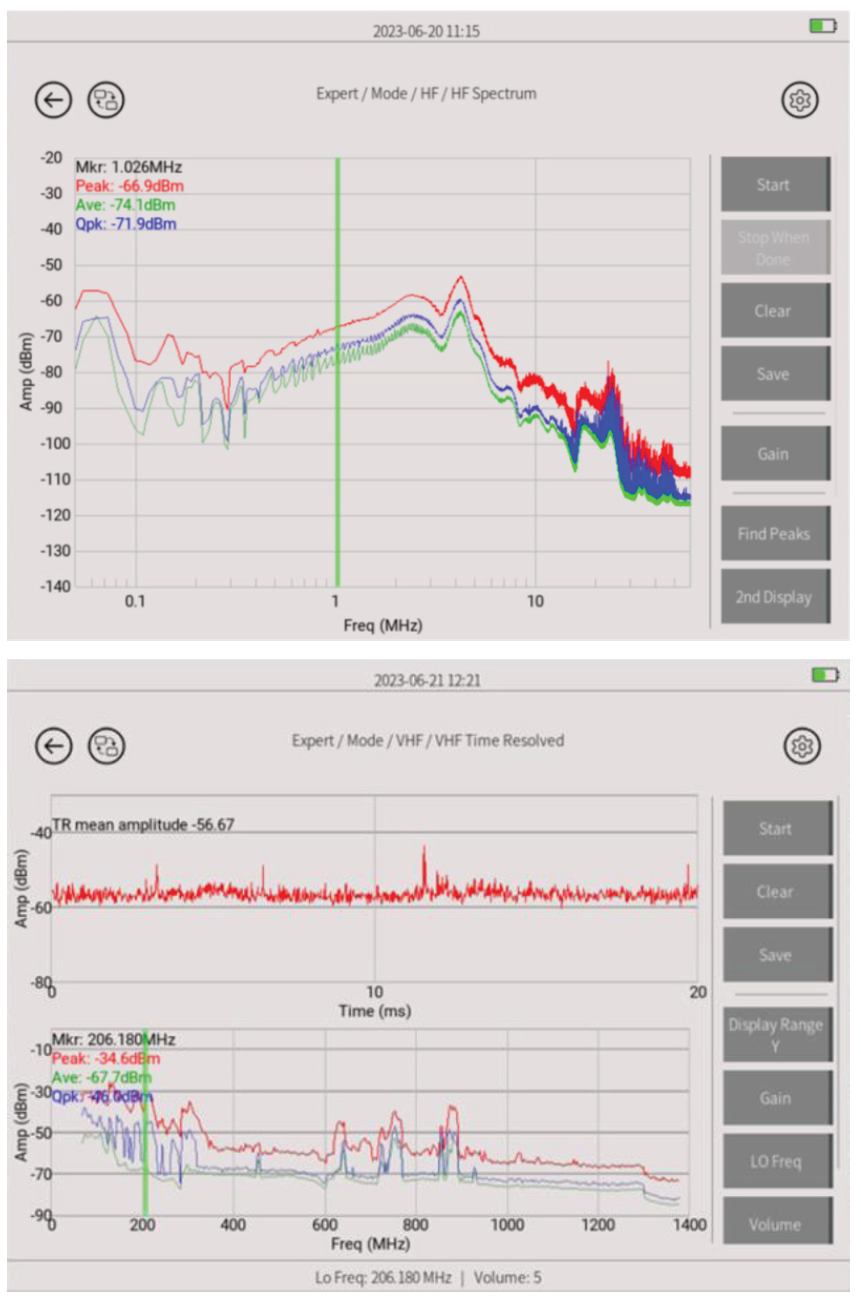
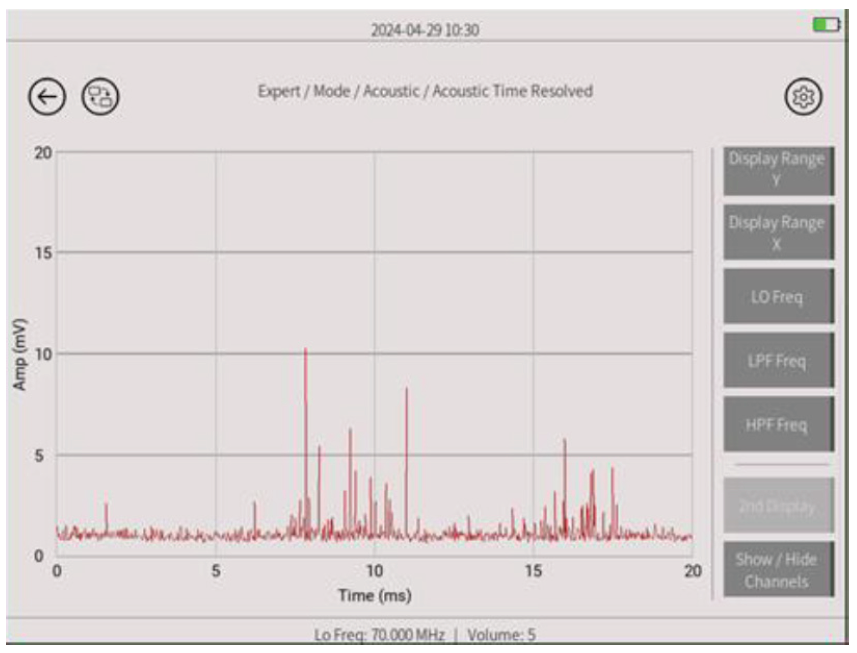
Time Resolved analysis allows the user to observe PD signals in real time, synchronized with the power frequency in the device under test.
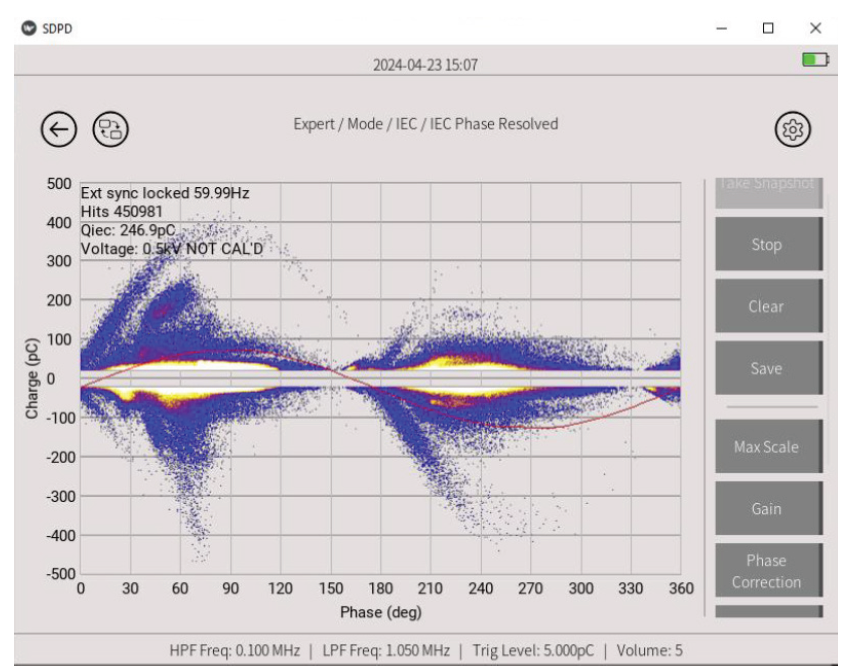
Phase Resolved PD analysis enables to diagnose and differentiate different types of PD as well as to differentiate PD from noise, allowing for reliable diagnostics.
In UWB/IEC mode, and ultra-wide-band detector with up to 60MHz bandwidth is used.
HF and UHF detectors utilize a tunable narrow-band detector with 1MHz (HF) and 6MHz (UHF) bandwidth, allowing to avoid measurements in frequency ranges where noise is present.
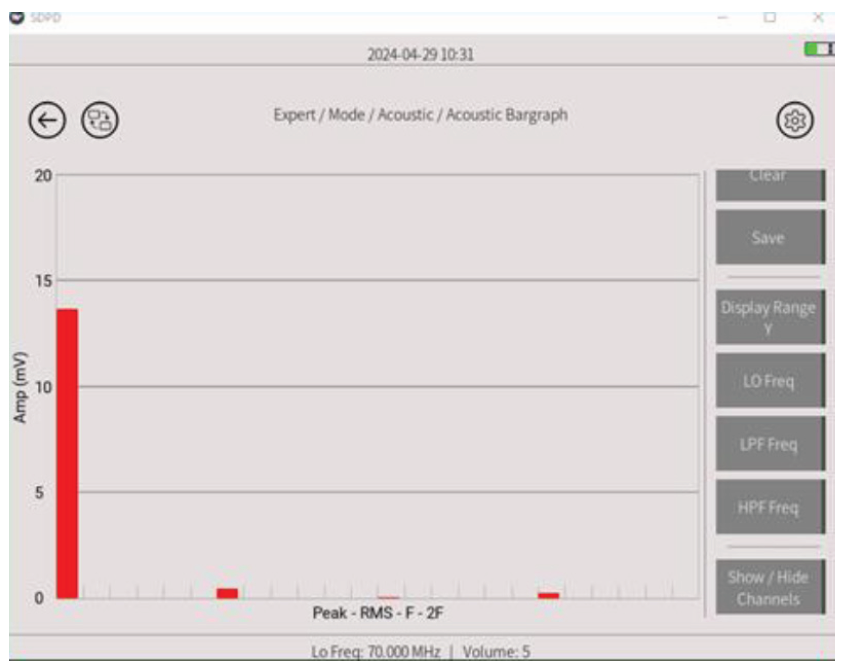
A simple analytical tool which helps to easily evaluate whether the PD may be present inside a test object. The Bar Graph analysis decomposes a measure signal into four components:
The ratio between peak and RMS allows to determine whether pulse shaped signals are present. A strong F component indicates corona, a strong 2F component indicates the presence of PD in a given input signal. Works in HF, UHF, and acoustic modes.
Watch the unboxing to see how our newest solution is engineered for performance, reliability, and real-world demands.